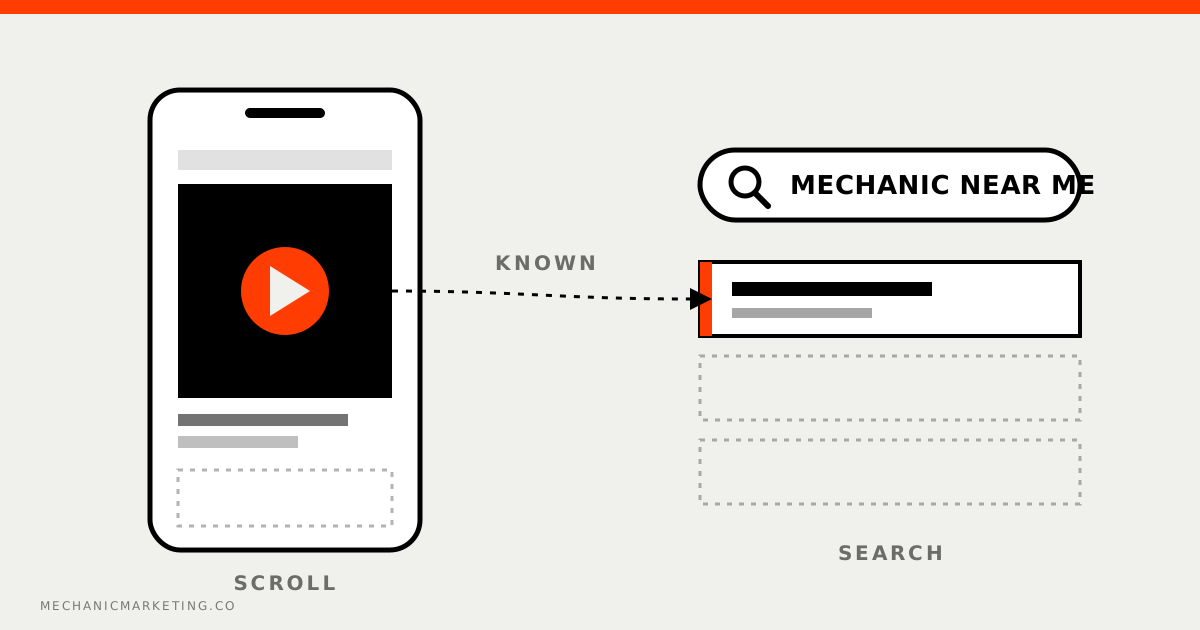
"Should I put my money into Google Ads or Facebook ads?" It's one of the questions we get asked most by workshop owners. Fair enough: budgets are tight, and nobody wants to pay for two things if one will do. But it's the wrong question. Google and Meta reach people at different moments, and they work best when they back each other up.
- Google catches people who are already searching. They know what they want, and they want it soon.
- Meta (Facebook and Instagram) reaches people while they're scrolling, before they need you.
- Meta's job is to make your name familiar. Google's job is to be there when they're ready to book.
- When someone searches and sees a name they already know, that's the one they're most likely to click.
Google: people who already know what they want
Someone types "mechanic near me", "brake repairs" or "logbook service" into Google because they need it done. They're not browsing. That's what people mean when they say Google is high intent.
Your job on Google is to answer that search and make them feel at ease clicking on you. That means ads that match what they typed, a page that matches the ad, and enough good reviews to look like the safe choice. If someone searches for brakes, show them brakes, not your homepage. We go through this in turning Google Ads clicks into customers.
Meta: people who aren't looking yet
On Facebook and Instagram, nobody is searching for a mechanic. They're scrolling past their mate's fishing photos and the footy highlights. They're in a much more passive mood, so your ad has to interrupt the scroll and give them a reason to stop.
That's a different mindset, so it needs a different kind of ad. Instead of "book now", the ads that work on Meta show something worth watching: a quick tip, a job on the hoist, a gross before and after. We covered when to teach and when to sell in Teach or Sell? How Workshops Should Use Meta Ads.
How the two work together
Here's how it plays out. A local sees your workshop's video on Instagram on a Tuesday night. Maybe it's a DPF clean, or a quick explainer on a warning light. They don't book. They don't even click. But your name sticks.
A few weeks later their car starts making a noise. They search on Google and a handful of workshops come up. One of them is a name they've seen before. That's the one they click.
Meta made you familiar. Google put you in front of them at the right moment. That's why we don't treat them as two separate jobs. Together they make sure you can be found wherever your customers are looking.
So which one should you start with?
If the budget only stretches to one for now, start with Google. Those people are ready to book, so it's usually the quickest way to fill bays. Get your Google Business Profile in shape at the same time, because it shows up right alongside your ads.
Once Google is bringing in steady work, add Meta to build your name around the area. Over time it makes your Google ads work harder, because more of the people searching already know who you are.
How to judge whether it's working
Don't judge Meta only on the bookings it gets directly. A lot of what it does shows up later, in Google searches for your workshop and in customers who walk in saying "I saw your video". Look at total bookings and enquiries over a few months, and ask new customers how they heard about you.
Common Questions
Is Google or Meta cheaper?
Clicks on Meta are usually cheaper. But someone clicking a Google ad is often ready to book, while someone on Meta is earlier in the decision. Compare what each one costs you per booking, not per click.
Can I just run Facebook ads?
You can, but you'll miss the people searching right now. Someone who liked your video might still search "mechanic near me" when their car breaks down and click whoever's ad is there.
How long before I see results?
Google can start bringing in calls within the first few weeks. Meta builds more slowly, as more locals see your name over a few months.
Want your Google and Meta ads working together? Book a call and we'll look at what you're running now.